A Drive Built to Move Water, Not Hold It
Driveway installation in Morgan for properties where access needs a properly shaped, draining surface from the start
The crown and ditch geometry of a driveway determines whether it sheds water cleanly or holds it until the surface deteriorates. Hatchett Dirt Work LLC installs driveways for rural and residential properties in Morgan by shaping that geometry correctly before any surface material is applied—crown built into the centerline so water runs to the edges, ditches cut to carry runoff away from the drive rather than along it. Chad Hatchett does the shaping and finishing work himself, which means the grading decisions that determine long-term performance are made by the operator on the machine, not handed off to a second crew.
On rural properties in the Morgan area, driveway installation often involves more than the drive surface itself. Culvert sizing and placement at road approaches, transitions across low areas, and tie-ins to existing yard grades all affect how the finished drive handles runoff and traffic loads. Those considerations are addressed during the planning conversation rather than discovered after the surface is laid down.
To review your property and what a properly installed drive will require, call Hatchett Dirt Work LLC at (507) 430-9703 to arrange an on-site visit.
A driveway without intentional crown flattens under traffic over time and begins pooling water at its center. That pooled water works into the base material, softens it, and accelerates rutting. Shaping the crown from the start—so the highest point runs along the centerline and the surface falls consistently toward both edges—means that every rain event pushes water away from the load-bearing center rather than through it. The ditch profile on each side has to match the crown geometry to carry that water somewhere rather than letting it back up onto the surface.
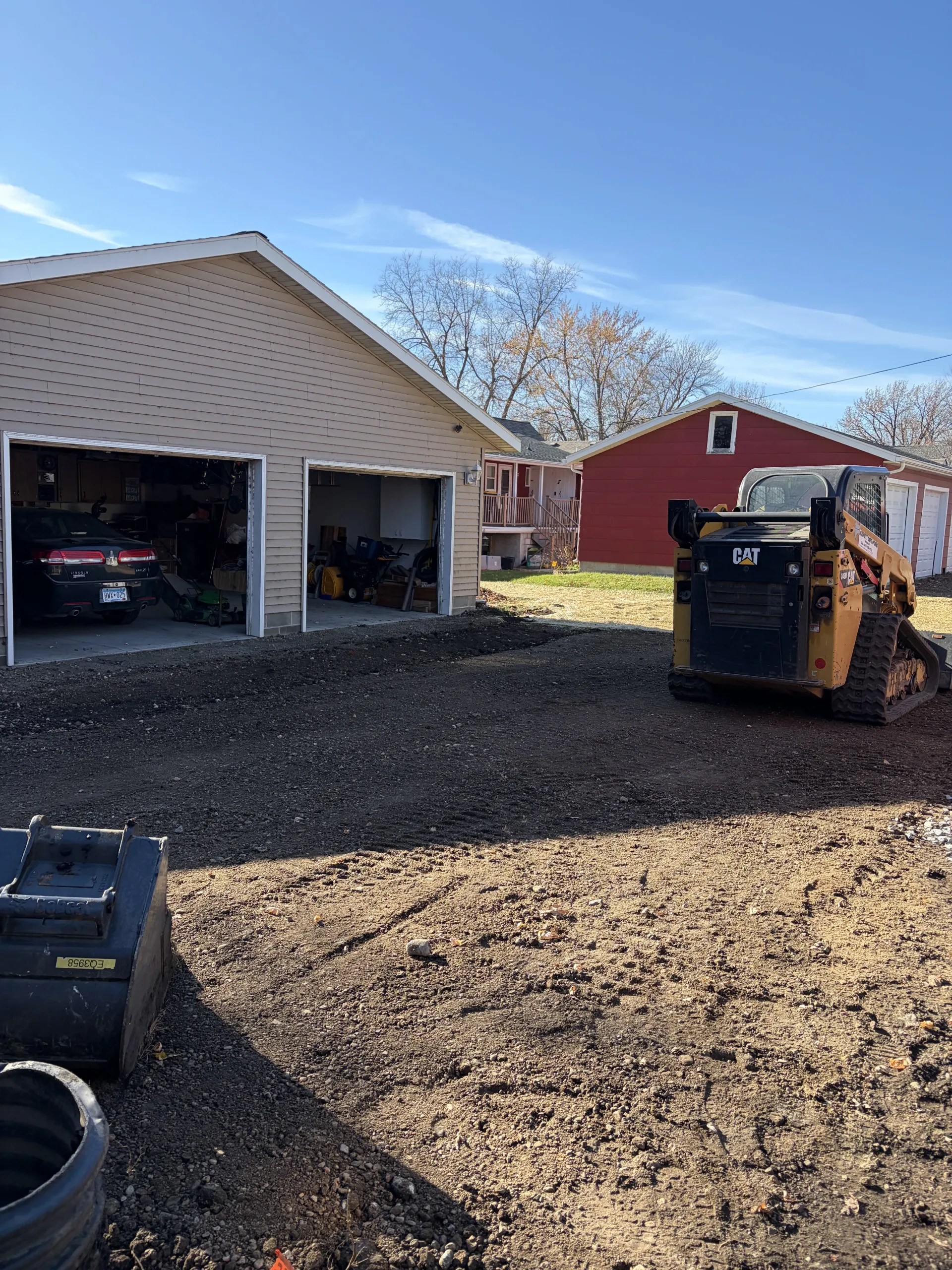
Once the surface is finished and the ditches are shaped, what you see is a drive that reads visibly higher at the center, with clear drainage paths along both sides. After a rain, water leaves the surface quickly rather than sitting in tire tracks or low spots. That visible drainage behavior is the immediate indicator that the geometry was done correctly.
Surface material is agreed on before work begins, and the subgrade preparation is matched to what goes on top. A gravel surface needs a different base depth than a surface that will be treated or compacted differently, and that decision affects how the subgrade is shaped and compacted before finish material is applied.
Questions Before Starting Your Project
These are the questions rural and residential property owners in Morgan commonly have before driveway installation work begins on their property.
What does crown mean on a driveway and how much is correct?
Crown is the convex shape across the width of the drive—higher at the center, lower at the edges—that causes water to run off rather than pool. The amount of crown is proportional to the drive width; wider drives need more rise to produce effective runoff, and the exact measurement is calibrated to the surface width during the shaping pass.
How is subgrade preparation different depending on what surface material is used?
A gravel surface requires consistent compaction of the base layer so the aggregate locks together under traffic. Where the base is soft or variable—common on rural lots that have not had a drive before—fill is brought in and compacted before any surface material goes down. Skipping base preparation is the primary reason a new gravel drive develops ruts within the first season.
Why does culvert placement matter at the road approach?
A culvert under the approach keeps the roadside ditch functional while giving vehicles a continuous surface to cross. Undersized culverts back up during heavy runoff and erode the approach from below; a culvert sized to the ditch flow and set at the correct depth keeps the approach stable without disrupting the road drainage pattern.
How do existing yard grades affect where the driveway is routed and how it is finished?
On rural Morgan-area properties, the finished driveway has to tie into the existing yard elevation without creating a dam that redirects yard drainage across the drive surface. Where yard grades slope toward the drive path, a shallow interceptor ditch or a grade adjustment on the tie-in prevents runoff from crossing the surface and eroding the edge.
What indicates that a driveway installation is finished correctly?
The surface reads consistently crowned across its width, the ditches on both sides are clear and carry water away from the drive, there are no low spots that collect standing water, and the approach at the road sits flush with the culvert without a bump or drop that would stress the structure under vehicle weight.
Hatchett Dirt Work LLC also installs driveways in Sleepy Eye, Redwood Falls, Springfield, Franklin, and Fairfax. To talk through your
driveway project and get a site-specific plan together, call Hatchett Dirt Work LLC at (507) 430-9703.